The short version: a permeable driveway looks like a paver driveway when it's done — but the whole thing is decided by what you can't see. On this Somerville job we dug down a full 16 inches and built the base out of 3/4-inch open-graded stone. Those open voids between the stones are what let rain soak straight through and stay on the property instead of running to the street. That's what makes it drain, what makes it last our winters, and what earns Somerville Green Score credit.
People ask what makes a permeable driveway different from a regular one. Here's the honest answer, from a real Sycamore Street install: it's not the pavers on top — it's the excavation and the stone underneath. Here's how we build it.
Step 1: Dig it out
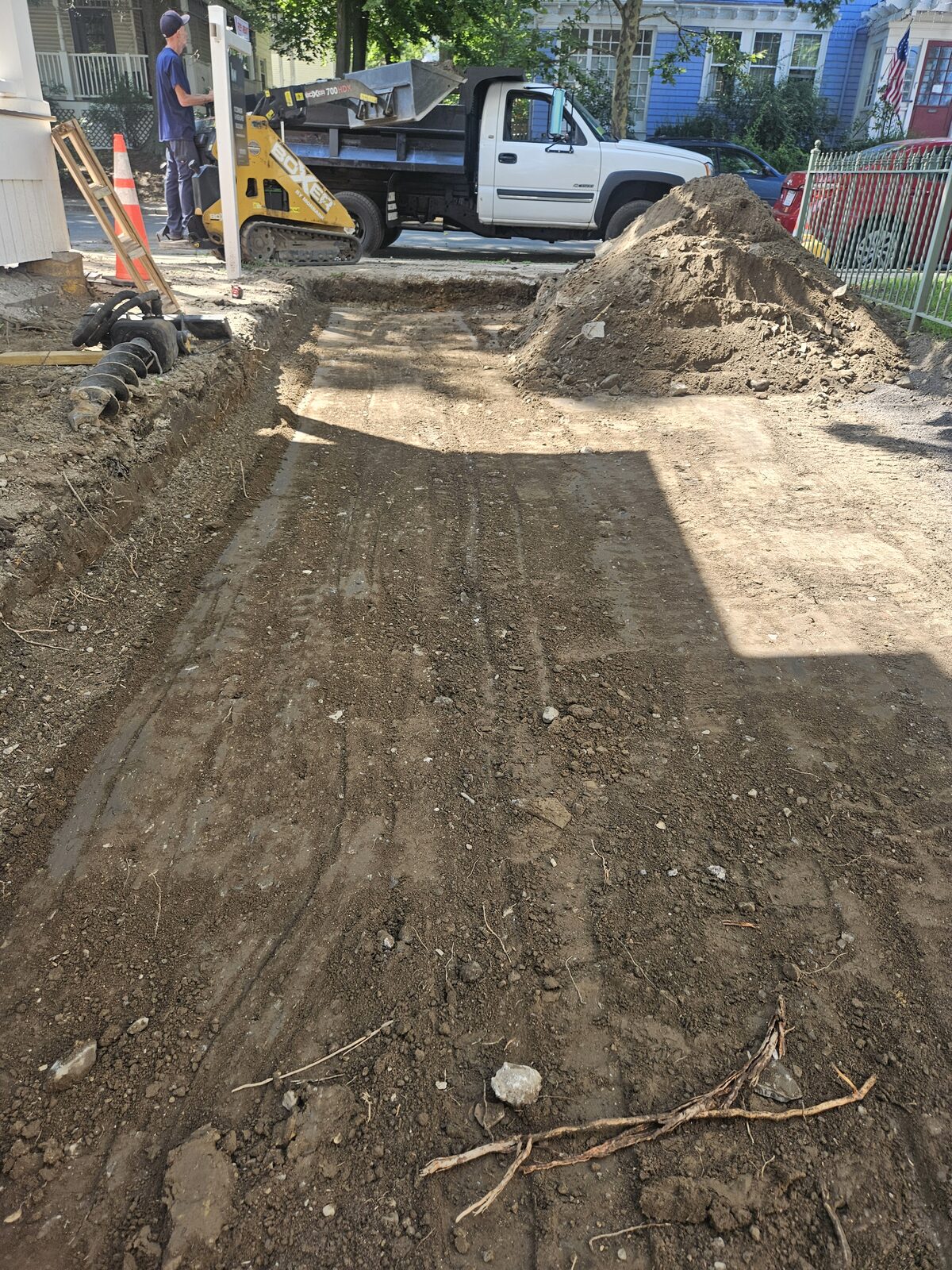
A permeable driveway starts with a real hole. We strip out the old surface and topsoil and excavate down to a firm, clean subgrade — no shortcuts, no gravel dumped on undisturbed dirt. On a tight Somerville lot that means a compact track loader and a dump truck working the front, hauling the spoils off site. This is where a permeable job is won or lost: if the excavation is shallow, the base can't store water, and the whole point is gone.
Step 2: Go deep — 16 inches
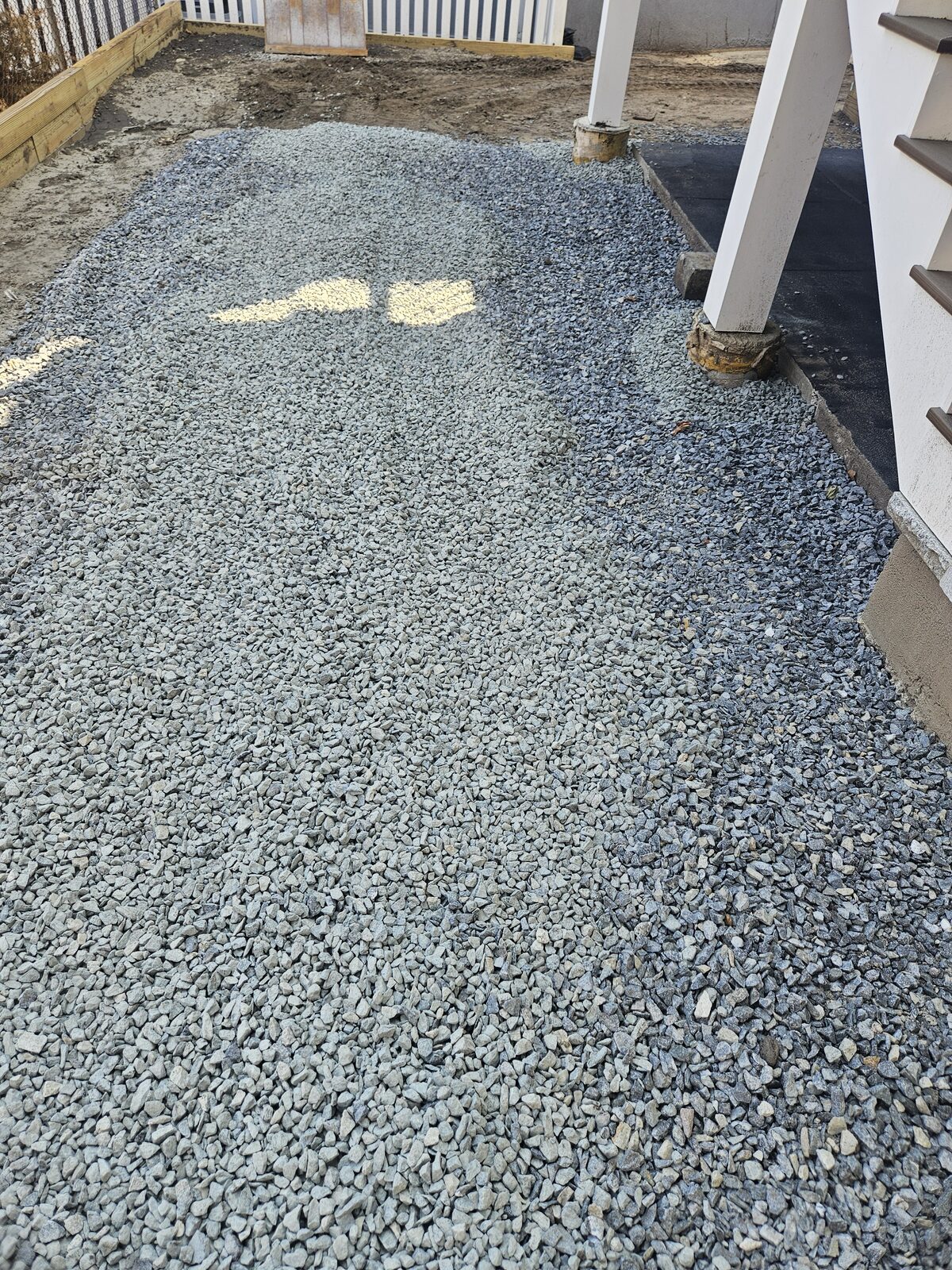
A standard driveway base runs 8 to 12 inches. A permeable driveway needs more, because the base isn't just holding the surface up — it's a reservoir. On this one we went 16 inches. The deeper the open-stone base, the more stormwater it can hold and let soak into the ground during a heavy New England downpour. That depth is exactly what makes the Green Score math work, and it's exactly what a cheap quote cuts.
Step 3: The right stone — 3/4-inch open base
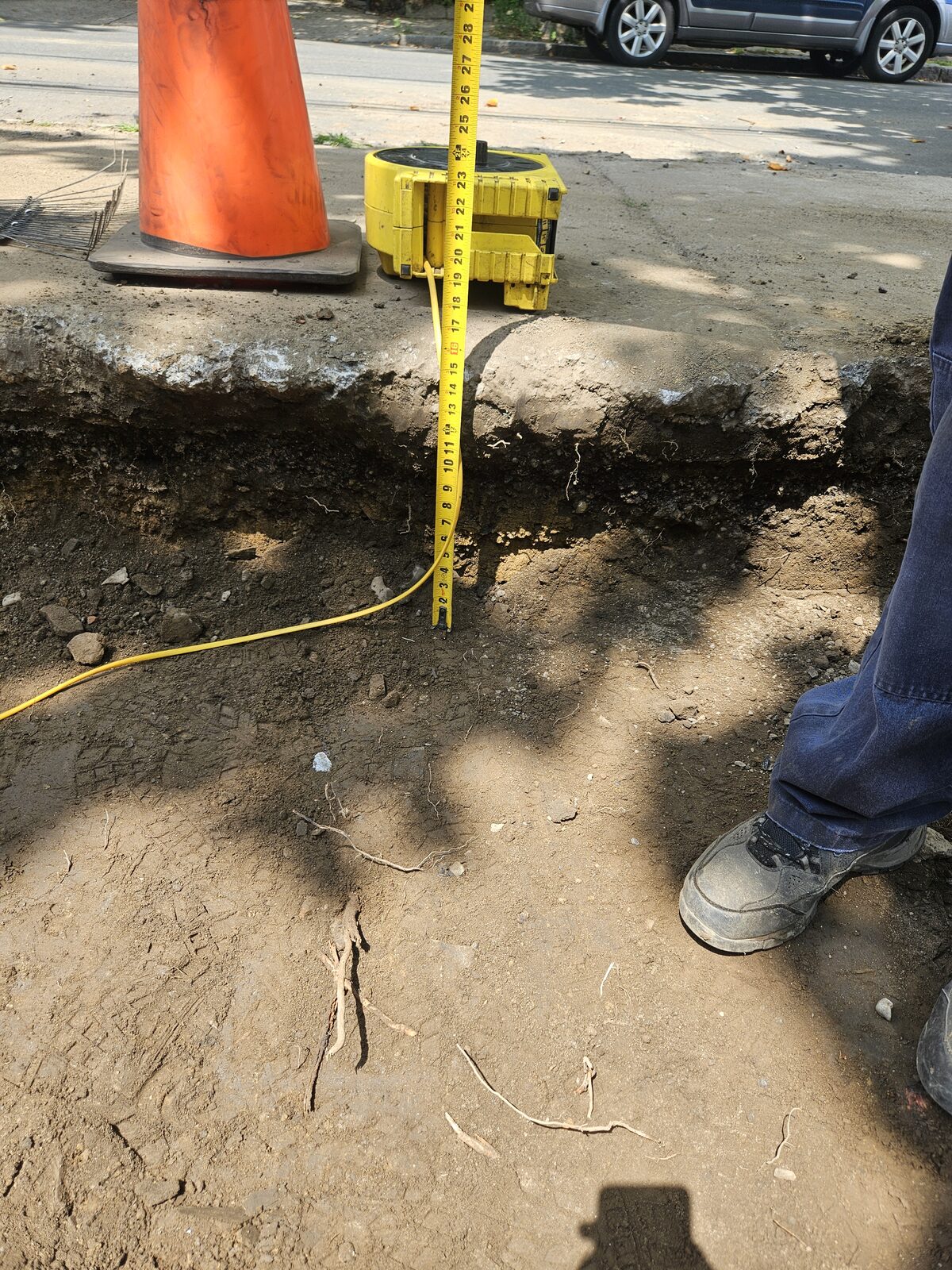
This is the part that actually matters and the part people get wrong. We use 3/4-inch open-graded stone — clean crushed stone with the fine dust screened out. Because there are no fines, there are open voids between every stone, and water flows straight through and is stored down in the base. Regular processed gravel is the opposite: it packs tight and sheds water off the top. Use the wrong stone and you've built a regular driveway that just cost more. Compacted in lifts, this open base is what carries the load and handles the water.
What goes on top
Once the base is in and compacted, the permeable pavers go down over a thin setting layer, with wide open joints filled with clean stone so water keeps flowing through the surface into the base below. (Finished photos coming soon — we'll add them here when this driveway wraps.)
Why it matters — and why it earns Green Score
A permeable driveway keeps rainwater on your property instead of dumping it into the street and the storm system. In Somerville, that's not just good practice — it earns Green Score credit under the city's zoning, which can be the difference in getting a project approved. But the credit only counts if the base is built to actually infiltrate water. That's the whole reason we dig 16 inches and use the right stone. It's also just good drainage engineering — the same thinking that goes under every patio and wall we build.
Thinking about a permeable driveway in Somerville?
Whether it's for the Green Score or just a driveway that drains and lasts, we'll come look at your lot and put a straight written estimate in your hands — free, no pressure.
Get a Free Quote 📞 (781) 859-5304Permeable driveway FAQs
What goes under a permeable driveway?
A deep base of open-graded (clean) crushed stone over excavated subgrade. On this Somerville driveway we dug down 16 inches and filled it with 3/4-inch open stone — the voids hold rainwater and let it soak into the ground instead of running off.
How deep does a permeable driveway base need to be?
Deeper than a standard driveway, because the base has to store water, not just support the surface. On this job we excavated a full 16 inches. Exact depth depends on soil and how much stormwater the design has to hold.
What is 3/4-inch open (open-graded) stone?
Clean crushed stone with the fine dust screened out, so there are open voids between the stones. Water flows straight through and is stored underground. Regular processed gravel packs tight and holds water on top — the opposite of what you want.
Does a permeable driveway help with the Somerville Green Score?
Yes — because it keeps stormwater on site, a properly built permeable driveway earns Green Score credit under Somerville's zoning. The credit depends on the base being built to actually infiltrate water.
How big was this Somerville driveway?
About 22 feet long by 10 feet wide (~220 sq ft), on Sycamore Street in Somerville, built as a fresh permeable paver driveway on a 16-inch open-graded base.