Short answer: the pattern is the personality of the patio — herringbone reads classic and rich, running bond is clean and budget-friendly, large-format slabs read modern, and a contrasting border is the cheapest upgrade that makes any of them look custom. Below: all six patterns with diagrams, photos from our own Greater Boston jobs, and the honest word on which fits which yard.
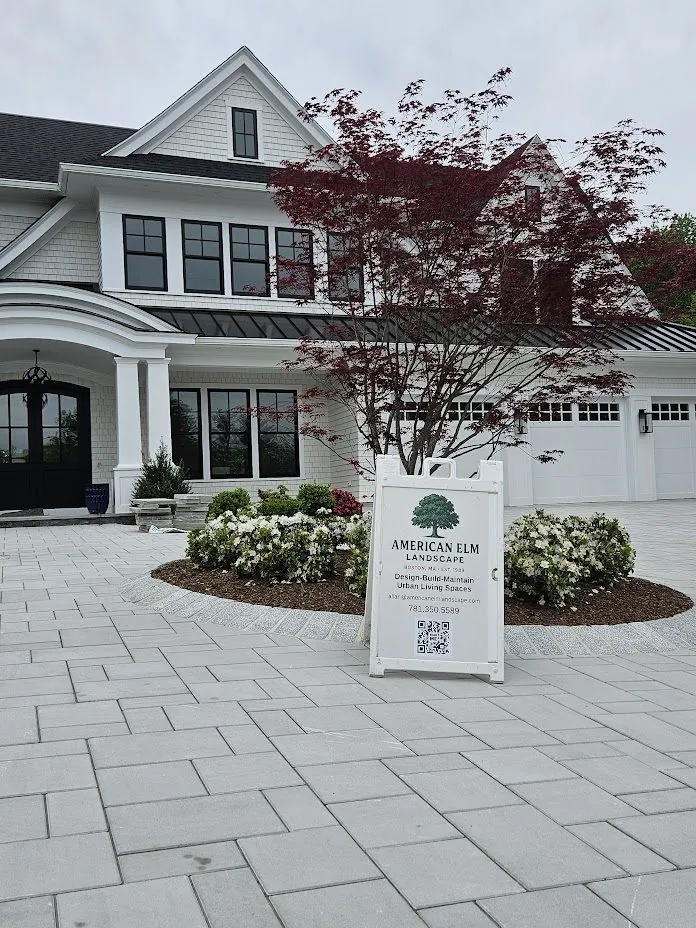
Every one of these ideas comes from a real backyard we built in Somerville, Medford, Cambridge or Boston — not a stock-photo site. Steal freely. And when you're ready to know what your version costs, the numbers are in our patio cost guide.
The six laying patterns, explained
Same paver, different pattern, completely different patio. Here's each one, and the straight talk:
Ideas from our own jobs
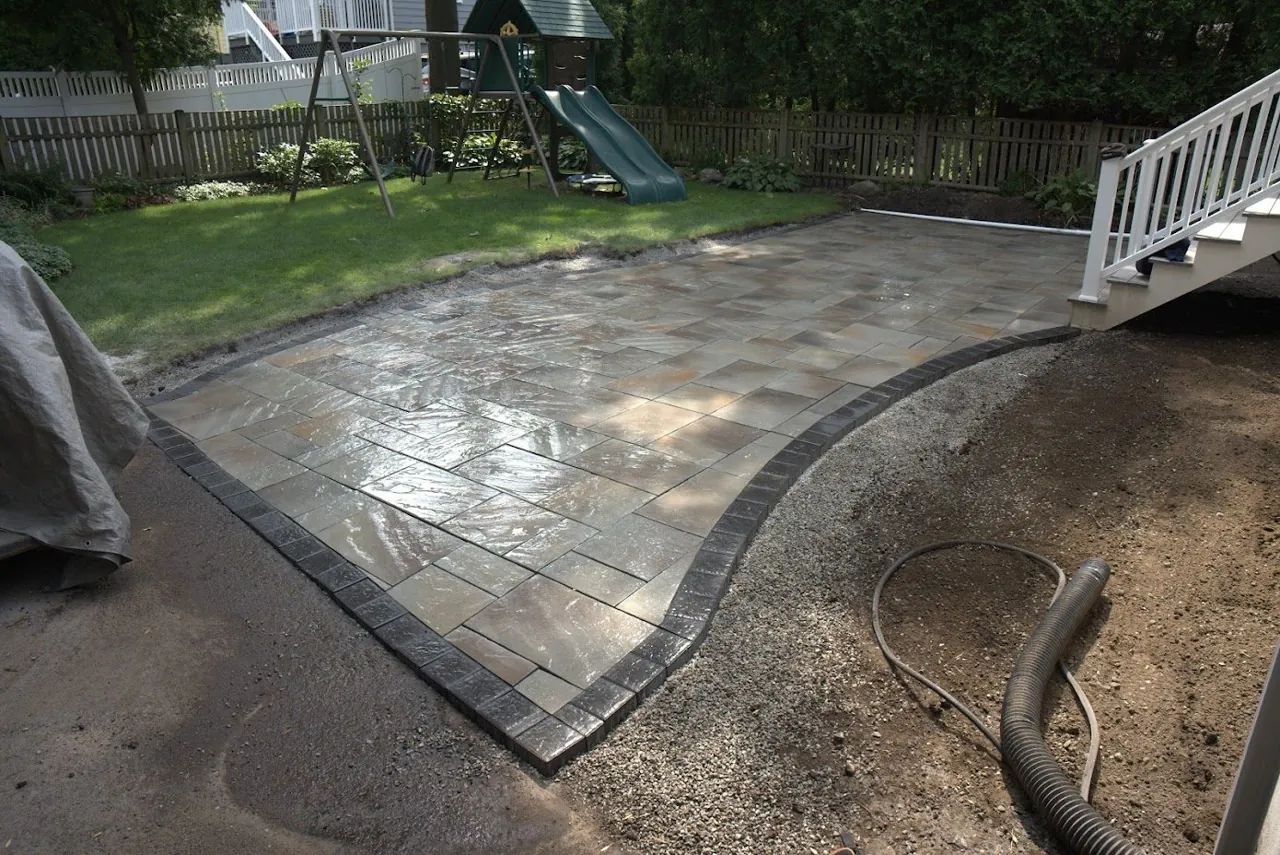
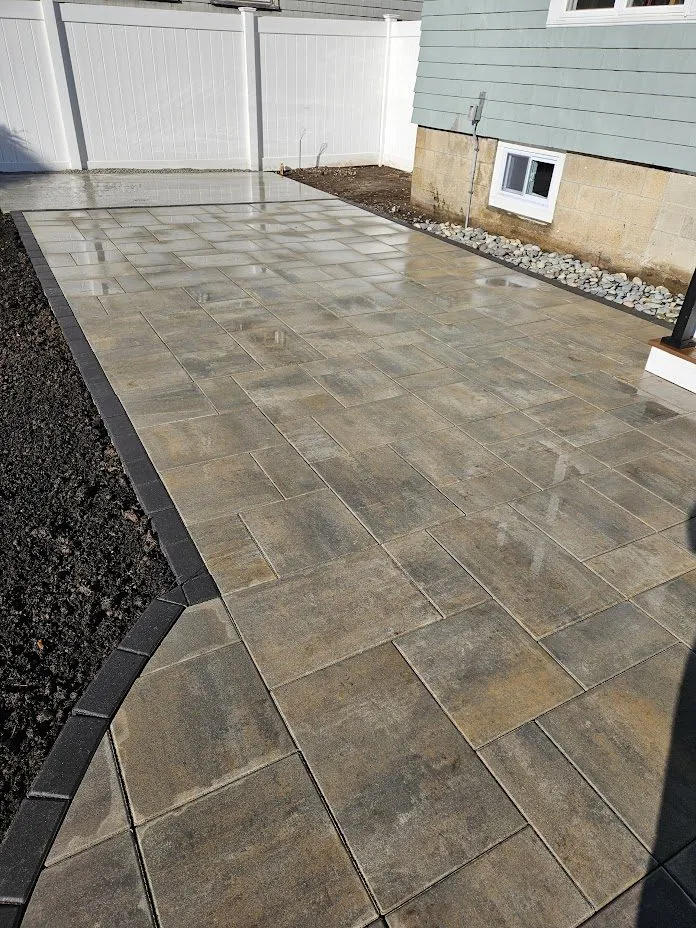
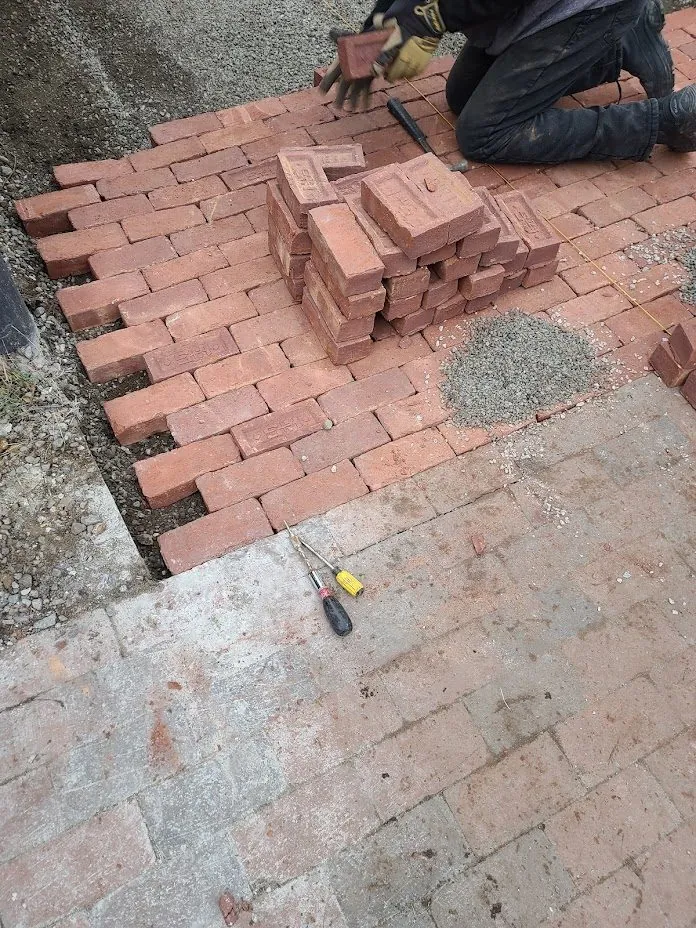
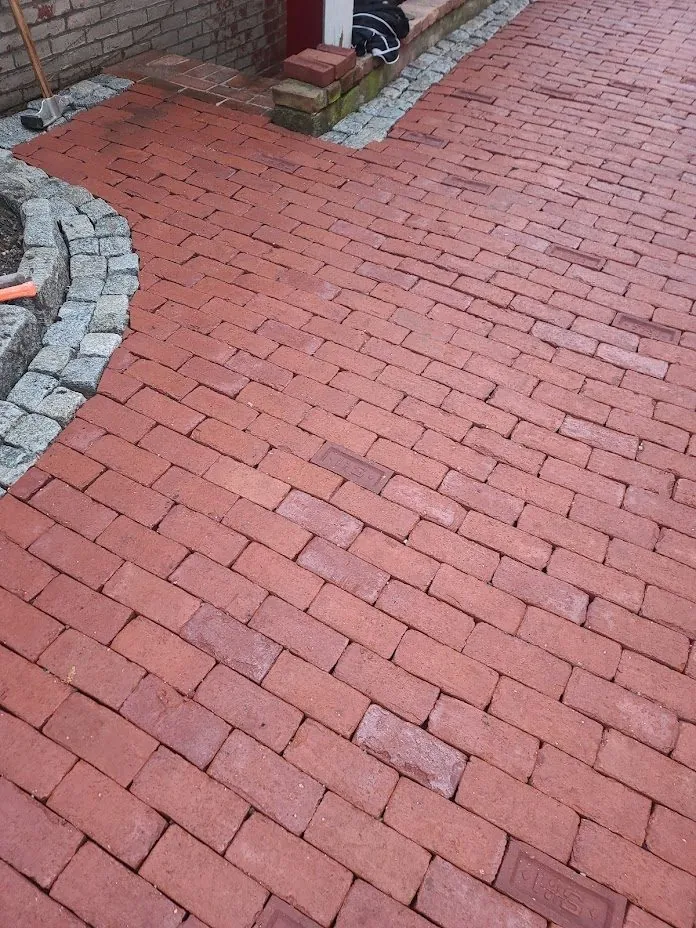
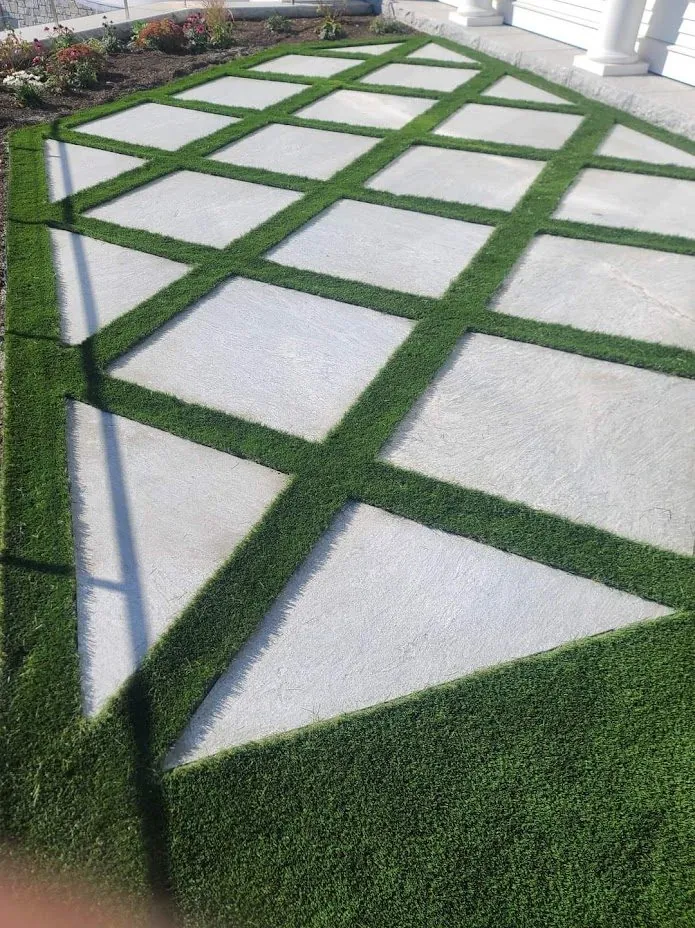
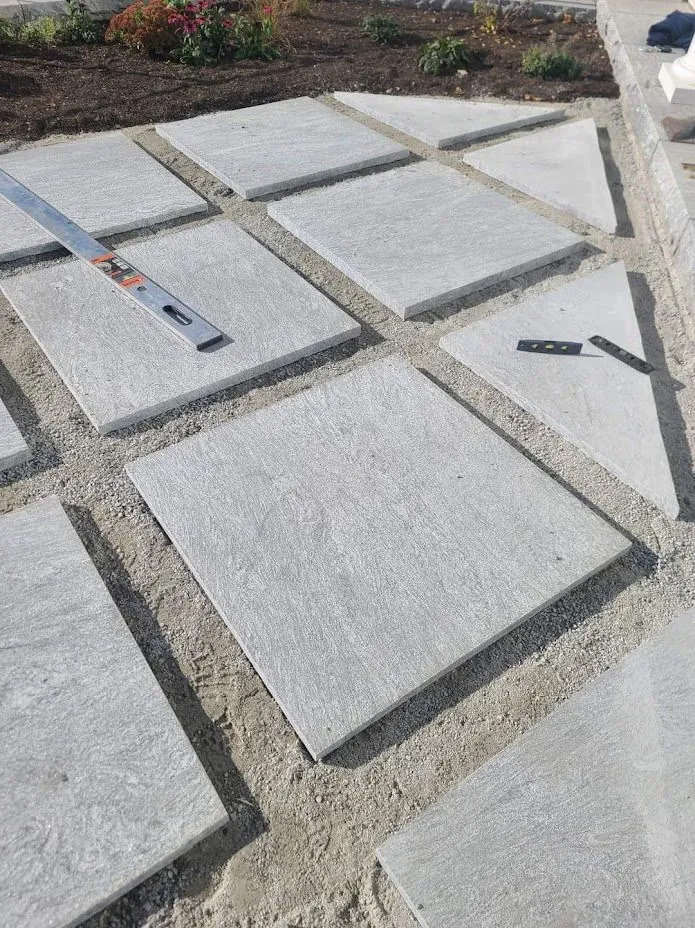
Seven moves that worked, photographed on the jobs where we built them:
Which pattern for which job
| Pattern | Best for | Straight talk |
|---|---|---|
| Herringbone 90° | Driveways, high-traffic patios, brick looks | Strongest interlock. The default for anything a car touches. |
| Herringbone 45° | Showcase patios and walks | The premium look of the classics. More cuts = a bit more labor and waste. |
| Running bond | Budget-smart patios, narrow yards | Fast, low waste, clean. Run it across a narrow space to widen it. |
| Basketweave | Colonial & historic-district homes | Charming in brick. Keep it off driveways. |
| Ashlar random | Bluestone & natural-stone patios | The organic look. Wants a builder who plans the layout, not wings it. |
| Large-format | Modern homes, small city yards | Fewer, bigger units make tight spaces feel bigger. The current favorite. |
Five upgrades that punch above their price
- A contrasting border — $3–$8 per linear foot, and it's the difference between "nice patio" and "who built that?"
- A banding line — one course of contrast running through a big field breaks up the expanse and adds design for almost nothing.
- A seating wall — $60–$120 per linear foot: permanent seating, defines the room, doubles as planter backing.
- A fire pit — $2,000–$6,000 built in, and it adds two months of patio season on each end. See fire pits.
- Lighting — $1,200–$3,500 installed. Border lines and steps lit at night make every other dollar you spent visible after dark. See landscape lighting.
Small yard? Different rules.
Somerville and Cambridge yards play by their own rulebook: bigger units, simpler patterns, lighter colors, one strong border — and skip the busy small-unit layouts that shrink a space. We wrote a whole guide for tight city yards: small backyard patio ideas that actually work.
What does all this cost?
The honest answer: the pattern is a small slice of the price — the base and the material drive it. Concrete pavers and brick run about $38 per square foot installed, bluestone about $50; a 45° herringbone or heavy border work adds modestly to labor. Full numbers by size, material and town: what a paver patio costs in Massachusetts.
Bring us the idea — we'll bring the yard math
Screenshot the photo you like, or just describe it. We'll come out, measure, and tell you what that look costs in your yard — free written estimate, no pressure.
Get a Free Quote 📞 (781) 859-530437 years. 500+ patios across Greater Boston. Unilock Authorized Contractor. Licensed and insured.
Pattern & design FAQs
What's the most popular paver patio pattern?
Running bond and herringbone are the classics; large-format slabs in a simple offset layout are the fastest-growing look in Greater Boston. Herringbone reads traditional and rich, running bond clean and budget-friendly, large-format modern.
Which paver pattern is the strongest?
Herringbone — the interlock spreads loads in two directions, which is why it's the standard for driveways. On a furniture-and-feet patio, any properly-based pattern is plenty strong; the base decides the lifespan, not the pattern.
Does the laying pattern change the price?
Somewhat. A 45° herringbone means more cuts at every edge — more labor and waste than a 90° layout or running bond. Borders add a few dollars per linear foot. The base and the material drive the price; the pattern seasons it.
What looks best in a small Boston backyard?
Larger units, simpler patterns, tight joints — big slabs make a small space feel bigger, busy patterns shrink it. One contrasting border adds polish without clutter.
Can patterns be mixed?
Yes — that's where the character comes from. A herringbone field with a soldier-course border, large-format with a cobblestone edge, or a banding line through a big patio are all classic moves.